Following International Day of Persons with Disabilities (IDPD) on Sunday 3rd December, now is the perfect time for firms to assess their recruitment processes to ensure disabled candidates aren’t excluded. For example, is a job requirement to hold a driving licence and own a car? Is it possible for journeys to be made via public transport instead?
You might think that your hiring process is fully inclusive, but as experts in recruiting accountants into firms across the UK we see areas of improvement from time to time. That’s why we’re sharing our thoughts on how firms like yours can foster an inclusive hiring process and a working environment that welcomes everyone.
First, what is IDPD?
International Day of Persons with Disabilities is a globally recognised observance dedicated to promoting the rights and wellbeing of persons with disabilities. The annual event highlights the importance of inclusivity, accessibility, and equal opportunities for individuals with disabilities, while also celebrating their achievements and contributions to society.
With more than 4.4 million disabled people in work, it is vital to raise awareness of the need for accessible and inclusive workplace processes. And employing persons with disabilities is good for business!
According to AbilityNet, a UK charity that provides free resources and a community for individuals with any disability, of any age, it can help to:
- draw on a much broader talent pool
- employ and retain high quality staff who are skilled, loyal and hard working
- improve employee morale and reduce absence through sickness
- create a diverse workforce that more closely reflects your range of customers and the community where you operate
When we think about accessibility in the workplace we might think about step free entry points or tailored desk set ups, but what about during the application and interview stages? There might be things you haven’t considered before…
Inclusive job requirements
Whilst all roles will have specific job needs, such as technical knowledge relevant to the job or a particular level of software experience, there are some requirements that could potentially be unnecessarily excluding disabled candidates. We mentioned the driving licence and car ownership requirement in the intro, and this is one we often see within practice accounting. With field work a common duty within audit and client office visits for accountants, travel can play a significant part in someone’s job, but it’s important to consider all transport methods that an employee could use. There’s also car sharing, which would not only help each other out but would also help the environment… it’s a win win.
By making your job requirements accessible, you’ll encourage applications from a wider talent pool and promote inclusivity within your firm. There might be some other requirements that are listed as standard but aren’t actually integral to the delivery of the role, so take some time to review them with accessibility in mind.
Equitable support systems
We’ve previously talked about equality vs equity and understanding the difference is crucial for creating an inclusive working environment. Providing your team with equitable support means understanding their needs and tailoring processes and systems to each member of staff. This powerful graphic created by the Robert Wood Johnson Foundation perfectly illustrates the difference.
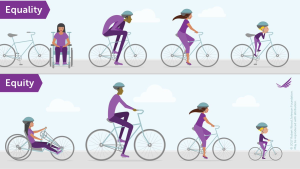
Whilst equality seeks to provide all employees with access to the same resources, equity recognises that each employee has varying access to resources. Here are just some things to consider when creating equitable support systems:
- Are your meeting rooms or shared spaces wheelchair-friendly?
- Does your corporate video presentation have accurate closed captions?
- Is your office prepared to accommodate employees with sensory sensitivities?
- Are desks tailored to each employees needs? This includes things like desk height, monitors, visual and audio set up.
- Is there a safe and confidential way for employees to communicate personal requirements or concerns with a member of staff?
Empathic interview processes
While a typical interview may be an in-person conversation and perhaps even a short test or trial project, it’s important to recognise that candidates may excel most when communicating differently with specific requirements for interactions. Perhaps an online interview would be more accessible due to transport requirements, or it could help to provide a more comfortable setting for a first introduction before eventually meeting in person.
It’s not appropriate to ask a candidate questions about their disability at interview, and candidates do not have to disclose their condition when applying for a job. However, asking if they have any requirements or if any adjustments to the application process would help them will foster an accessible and inclusive process. Remember, not all disabilities are visible, so it’s best to ask all candidates this as standard.
So, is your firm doing enough to create an accessible hiring process and inclusive workplace? Gone are the days when a one-size-fits-all approach is acceptable for recruitment, benefits, policies, and working environment. We’re representing skilled and experienced candidates who are keen to work with forward-thinking firms with modern values that foster an inclusive team. Is that your firm?
Whether you have roles to fill or if your team would benefit from some expert advice on your recruitment needs, we’re here to help. Contact the team today.